

Over 8 Certified Doctors
Top Of The Line Care

Expert Surgical Care Options

Over 9 Dental Experts
A frenectomy releases a tight band of tissue under the tongue (tongue-tie) or under the upper lip (lip-tie). Park Smiles NYC performs laser frenectomies for infants and children at its Carnegie Hill office. The procedure takes minutes, causes little bleeding and usually needs no stitches. Pediatric dentists Dr. Jessica Brezel Kaplan and Dr. Dascher Branch-Elliman evaluate how your child’s tongue and lip function before recommending treatment.
Call the children’s line: +1-212-461-9120 · Book a tongue-tie evaluation
Signs Your Child May Have a Tongue-Tie or Lip-Tie
In babies
- Difficulty latching or staying latched while breastfeeding.
- Clicking sounds, long feeds or frequent feeding.
- Slow weight gain.
- Nipple pain or damage for the nursing parent.
In toddlers and children
- Trouble with sounds such as l, r, t, d and th.
- Difficulty licking lips or sticking the tongue out.
- A heart-shaped tongue tip when the tongue is extended.
- Gagging or picky eating with certain textures.
- A gap between the upper front teeth (lip-tie).
- Mouth breathing or snoring.
Tongue-Tie vs Lip-Tie
| Tongue-tie (lingual frenulum) | Lip-tie (labial frenulum) | |
|---|---|---|
| Where it is | Under the tongue | Between the upper lip and gums |
| Main effects | Feeding, speech, tongue posture, swallowing | Latch, cleaning the front teeth, gap between front teeth |
| Procedure | Lingual frenectomy | Labial frenectomy |
Who Is a Candidate for Frenectomy
A frenectomy is recommended when a tie causes a real functional problem. Common candidates include:
- Babies who cannot latch or feed efficiently despite help from a lactation consultant.
- Toddlers and children whose speech therapist finds that tongue movement limits certain sounds.
- Children with mouth breathing whose tongue cannot rest against the palate.
- Children with a lip-tie that traps food on the front teeth or holds a gap open between them.

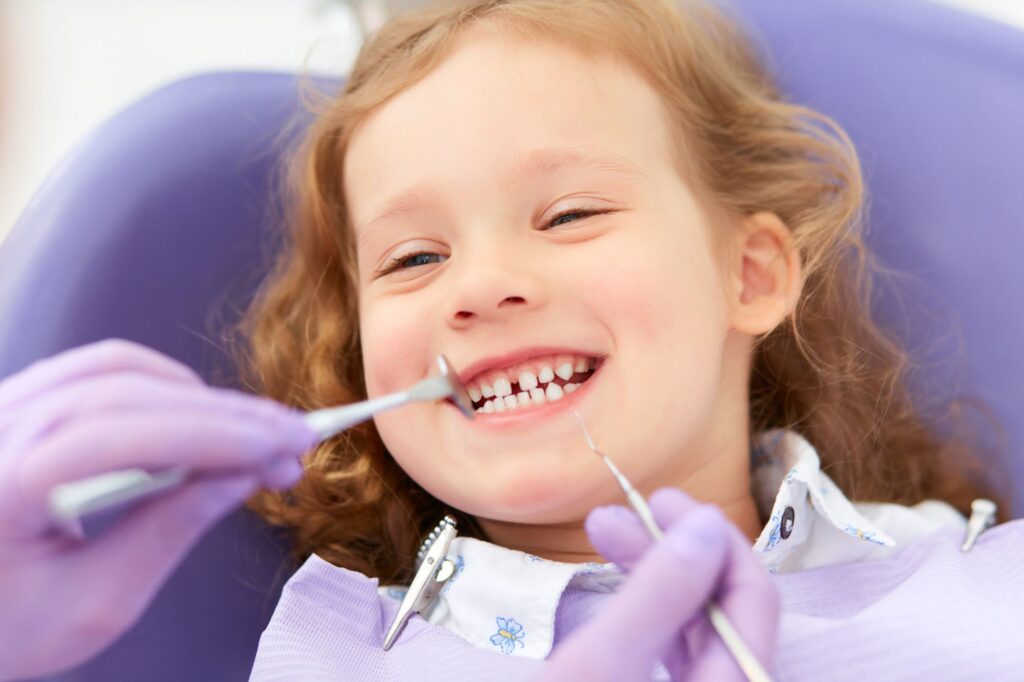
Laser Frenectomy at Park Smiles
A soft-tissue dental laser releases the frenulum precisely and seals blood vessels as it works. This gives four benefits:
- Minimal bleeding, because the laser seals tissue as it cuts.
- Usually no stitches.
- Fast healing with less swelling.
- A short procedure, often only a few minutes.
For babies, the procedure is often done awake with topical numbing. Older children receive local anesthetic and can have nitrous oxide if they feel anxious.
The Frenectomy Process
- Functional evaluation. The dentist assesses how the tongue and lip move and how they affect feeding, speech or breathing. A visible frenulum alone does not mean treatment is needed.
- Team input. For infants, input from a lactation consultant helps. For older children, a speech or myofunctional therapist often supports the result.
- Numbing. Topical or local anesthetic keeps your child comfortable.
- Release. The laser releases the frenulum in minutes.
- Immediate feeding. Babies can usually feed right after the procedure.
- Aftercare plan. You learn the stretching exercises that keep the area from reattaching.
Recovery and Aftercare
- Soreness usually lasts two to three days. Use a children’s pain reliever as your pediatrician advises.
- A white or yellow patch forms at the site while it heals. This is normal.
- Stretching exercises are done several times a day for about two to three weeks to prevent reattachment.
- A follow-up visit checks healing and function.
Tongue-Tie, Breathing and Jaw Growth
A tight tongue-tie can keep the tongue low in the mouth. Over time, this can encourage mouth breathing and a narrow upper jaw. Park Smiles evaluates tongue-ties as part of its pediatric airway screening. Learn more about mouth breathing and airway care for children and the practice’s airway orthodontics program.
Why Families Choose Park Smiles for Frenectomy
- Pediatric dentists with training in infant and childhood oral restrictions.
- Laser treatment for a gentle procedure and quick recovery.
- Function-first evaluation, so only children who will benefit are treated.
- Airway and orthodontic care in the same office when a tie affects breathing or jaw growth.
Meet Dr. Jessica Brezel Kaplan, or see all services on our pediatric dentistry page and our Upper East Side pediatric dentist page.
Frenectomy Cost and Insurance
The cost depends on whether one or both frenula are released and on your child’s age. Many plans cover frenectomy when a functional problem is documented. Park Smiles verifies your benefits before the procedure.
Frenectomy and Tongue-Tie FAQs
At what age can a frenectomy be done?
A frenectomy can be done at any age, including in newborns. The timing depends on the problem it is solving, such as feeding in infants or speech in older children.
Does a frenectomy hurt?
Numbing keeps the procedure comfortable. Babies may fuss briefly, and children feel mild soreness for two to three days afterward.
Is a laser frenectomy safe for newborns?
Yes, when performed by a trained provider after a careful evaluation. The procedure is quick, and babies can usually feed right away.
Will a frenectomy fix my child’s speech?
It can help when the tongue-tie is limiting tongue movement. Not every speech problem is caused by a tongue-tie, and many children also need speech therapy afterward.
Does every tongue-tie need treatment?
No. Treatment is recommended only when the tie causes a functional problem with feeding, speech, breathing or oral hygiene.
Can the tissue grow back?
The area can reattach as it heals if the stretching exercises are skipped. Doing the exercises as instructed for two to three weeks prevents this.
How long is recovery?
Most children feel normal within a few days. Full healing takes about two to three weeks.
Book a Tongue-Tie Evaluation
A functional evaluation tells you whether a frenectomy will help your child. Call the children’s line at +1-212-461-9120 or book online to visit Park Smiles NYC Pediatrics at 1175 Park Avenue.
We Provide Superior Results
At Park Smiles NYC in Carnegie Hill, Upper East Side, our mission is to provide every patient with exceptional care, prioritizing comfort, compassion, and excellence at every step.
We are dedicated to delivering outstanding results through personalized attention in a welcoming and supportive environment. Led by Dr. Krystle Kendall, D.M.D., our skilled team offers a full range of top-quality dental services—all conveniently available under one roof in Carnegie Hill.
Our skilled team in Carnegie Hill, Upper East Side, NYC is dedicated to offering a comprehensive array of the very best dental Treatments


Prosthodontics & Cosmetic Dentistry

Prosthodontics & Cosmetic Dentistry

Pediatric Dentistry
Pediatric Dentistry
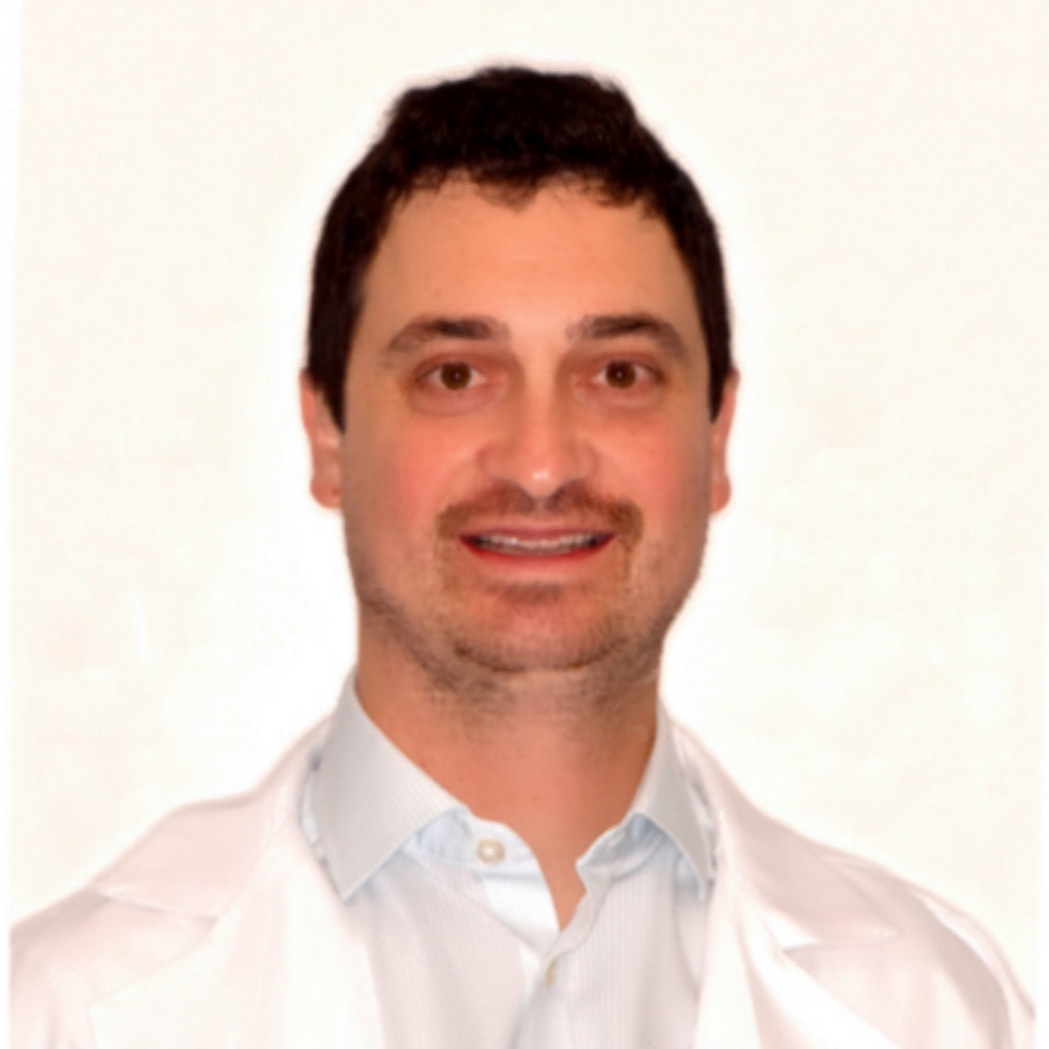
Orthodontics
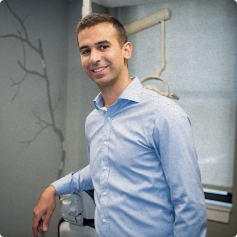
Oral Surgeon
Finance Your Treatment With Cherry Payment Plans
With Cherry we offer our patients the best “buy now, pay later” solution with high approvals, low cost, and a seamless experience.

Visit Our Office
Park Smiles NYC is proud to serve the historic Carnegie Hill community. Our office at 1175 Park Avenue is nestled among some of New York’s most iconic landmarks. We are:
Two blocks East of the Jacqueline Kennedy Onassis Reservoir in Central Park.
South of 96th Street, making us easily accessible via the 6 Train or the M1, M2, M3, and M4 bus lines on Madison and Fifth Avenue.
Walking distance to Museum Mile, including the Cooper Hewitt and Jewish Museum.
Easily accessible Upper East Side practice, located just two blocks from the 93rd Street entrance to Central Park and a short walk from the 96th St Q and 6 Subway stations.
- Park Smiles NYC Cosmetic Dentistry
- 1175 Park Ave # 1d, New York, NY 10128, United States
-
Business Hours:
Monday: 9AM-5PM
Tuesday: 9AM-7PM
Wednesday: 8AM-5PM
Thursday: 9AM-7PM
Friday: 9AM-5PM
Saturday-Sunday: Closed - +1-212-988-6724
We look forward to welcoming you to our office and helping you achieve a healthy, beautiful smile. Schedule your appointment today!
Schedule an Appointment with a Highly-Qualified Cosmetic Dentist in Carnegie Hill at Park Smiles NYC
If you are ready to enhance your smile, the experienced cosmetic dentists at Park Smiles NYC are here to help. Our dedicated team offers a comprehensive range of services, from orthodontics to teeth whitening, to meet all your oral health needs. We understand the importance of a healthy smile for your overall well-being and are committed to ensuring your satisfaction throughout your treatment journey.
Or Call +1-212-988-6724
